

Everything Else Can Be Rebuilt. Time Cannot.
Most of us spend our daily energy managing currencies that feel urgent but are fundamentally replaceable. Money. Status. Memberships. Objects. The FOMO around not being included in something. The obligation to keep attending the club you joined three years ago because you paid dues and it would feel wasteful to stop going. The car you maintain because it says something about you that once mattered and now mostly just costs time and money you do not have.
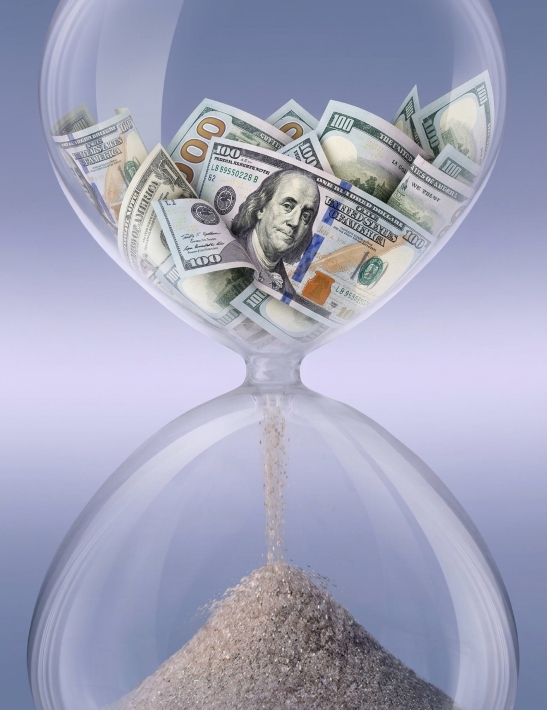
None of those currencies are the real currency. They are the lesser currencies. The only real one is time. And unlike every other resource in your life, when it is gone, it is gone. You cannot earn more of it. You cannot negotiate for a better rate. You cannot find it on sale or inherit it from someone else. It simply runs out, at a rate you cannot control and on a timeline you do not know.
That is not a dark thought. It is the most clarifying thought available to you, and I want you to sit with it for a moment before we go further. Because everything I am going to say next depends on genuinely believing this at the level of your gut, not just nodding at it as a reasonable observation.
Supply and Demand: Why Your Minutes Are Worth More Today Than They Were Yesterday
Here is the economic frame that made this concrete for me. Supply and demand. You learned it in school and probably apply it to markets and real estate without thinking about it. But it applies to your life in a way most people never make explicit.
The fewer minutes you have left, the higher the value of each remaining one. This is basic supply and demand: as supply shrinks, the price of each unit rises. Your time is becoming more expensive by the minute, literally, and the way you are spending it today reflects either an accurate or an inaccurate understanding of what it is actually worth.
I made this real for myself by looking at real estate during the hurricane recovery period. Properties around me were priced at a specific dollar amount per square foot of empty space. Not finished space. Empty space, with the potential to become something. That empty, available, uncommitted space had a real and significant dollar value precisely because of what it made possible.
Your time is the same. Empty, uncommitted, available time is your highest-value resource. Not because doing nothing is the goal. Because that uncommitted time is what makes the important thing possible. The moment you fill every square foot of your life with obligations, memberships, objects, tasks, and lesser currencies you are maintaining out of habit, you have no space left for the thing that actually matters.
The Garage Full of Boxes
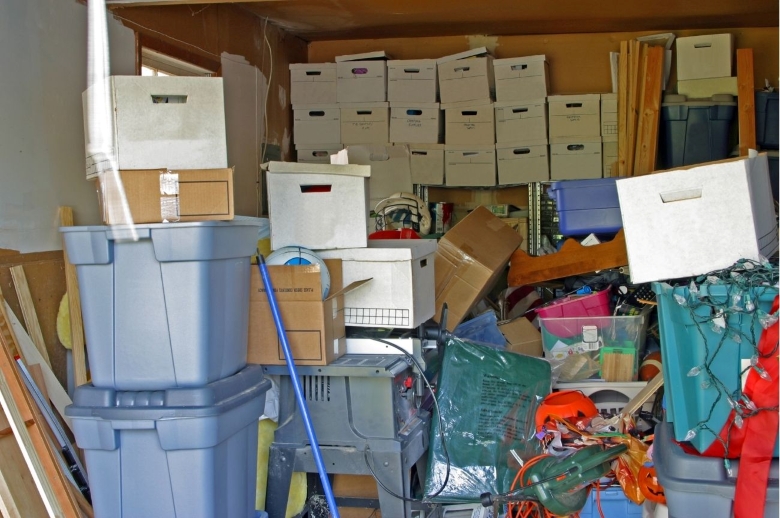
During the hurricane recovery, a neighbor was clearing out their flooded garage with the help of a visiting brother-in-law. The garage was packed, box after box, item after item. Each one had a reason it was kept. Each one had a memory or a justification. And yet the truth was plain: if something is in a box in your garage, it is not producing value in your life on most days.
The real estate value of that garage space, empty, available, usable, was significant. And it was being fully consumed by things that were not moving anyone's life forward.
Your schedule, your finances, and your daily habits work exactly the same way. Every commitment you maintain out of inertia rather than genuine value is a box in your garage. It is occupying expensive square footage in your life without contributing anything to the direction you actually want to go. The question worth asking, for every single box, is: is this producing real value in my life today? Or am I keeping it because I have not stopped to ask whether I should?
Why I Sold My Car on Carvana. Twice.
Here is a real example from my own life, because the theory is only worth something if it survives contact with an actual decision.
I had a nicer car. And then I thought seriously about what that car was costing me, not just in money but in what that money could be doing instead, what the time spent maintaining it and paying for it was not being spent on. I looked at the car honestly and asked: is this contributing to the thing I am actually here to do? Is this advancing KindEdge, or my health, or my sons, or the work I care about? Or is it just a version of keeping the status object because I had it and getting rid of it would feel like going backward?
I sold it on Carvana. Then I did it again. Downsized twice. And I would do it a third time if the math warranted it.
The car is not the point. The point is the discrimination, the willingness to look at any object or commitment in your life through the filter of: is this advancing me toward what I am here to do, or is it consuming the time and money that should be going there? That filter, applied honestly to every box in your garage, every membership you maintain, every obligation you carry by habit, is the foundational work that makes everything else in KindEdge possible.
The Lesser Currencies That Are Quietly Consuming Your Real One
The lesser currencies are not trivial. They feel important because they come with social weight. But they are lesser because they are replaceable and because, when examined honestly, most of them are not producing real forward momentum on the thing you are here to build.
They include:
- Objects — especially inherited ones that carry guilt rather than joy, or possessions that cost money and time to maintain without returning value toward your actual goals
- Memberships — clubs, gyms, subscriptions, organizations you joined when your life looked different and have not consciously re-chosen
- Status maintenance — the car, the neighborhood, the social performance of a life that looks right from the outside but is costing you the inside thing
- FOMO — the fear of missing out on something that keeps you saying yes to things your gut is saying no to
- Tasks you could delegate — things you do yourself because outsourcing them feels expensive, without doing the math on what your time is actually worth per hour
Every hour you spend on a lesser currency is an hour not given to the real one. And the real one is finite, shrinking, and becoming more valuable with every day that passes.
What to Do With This Right Now
The shift I am describing is not a one-time declutter. It is a foundational change in how you value time relative to everything else in your life. And it does not happen from understanding it intellectually. It happens from making one real decision that puts the principle into action.
Pick one lesser currency in your life this week and examine it honestly. Not judgmentally. Just honestly. Is this giving back proportionate to what it costs in time and money? Is it advancing the thing I am actually here to do? Or is it a box in my garage that I have not looked at in two years?
If the answer is the latter, that is your first experiment. Release it. Notice what it opens up. And then do it again with the next one.
The trains that have already left the station, the mortgage, the school, the promises made, are real constraints and they deserve to be honored. But within and around those real constraints, there is far more uncommitted square footage in your life than you have allowed yourself to see. The KindEdge process is specifically designed to help you find it, clear it, and put it in service of the one thing that only you can produce.
Your minutes are becoming more valuable by the day. Spend them accordingly.
Join me at kindedge.com. It is not going to be easy. But it is going to be fun.