



Convergence! Serendipity! Alignment!
I love it when a plan comes together…
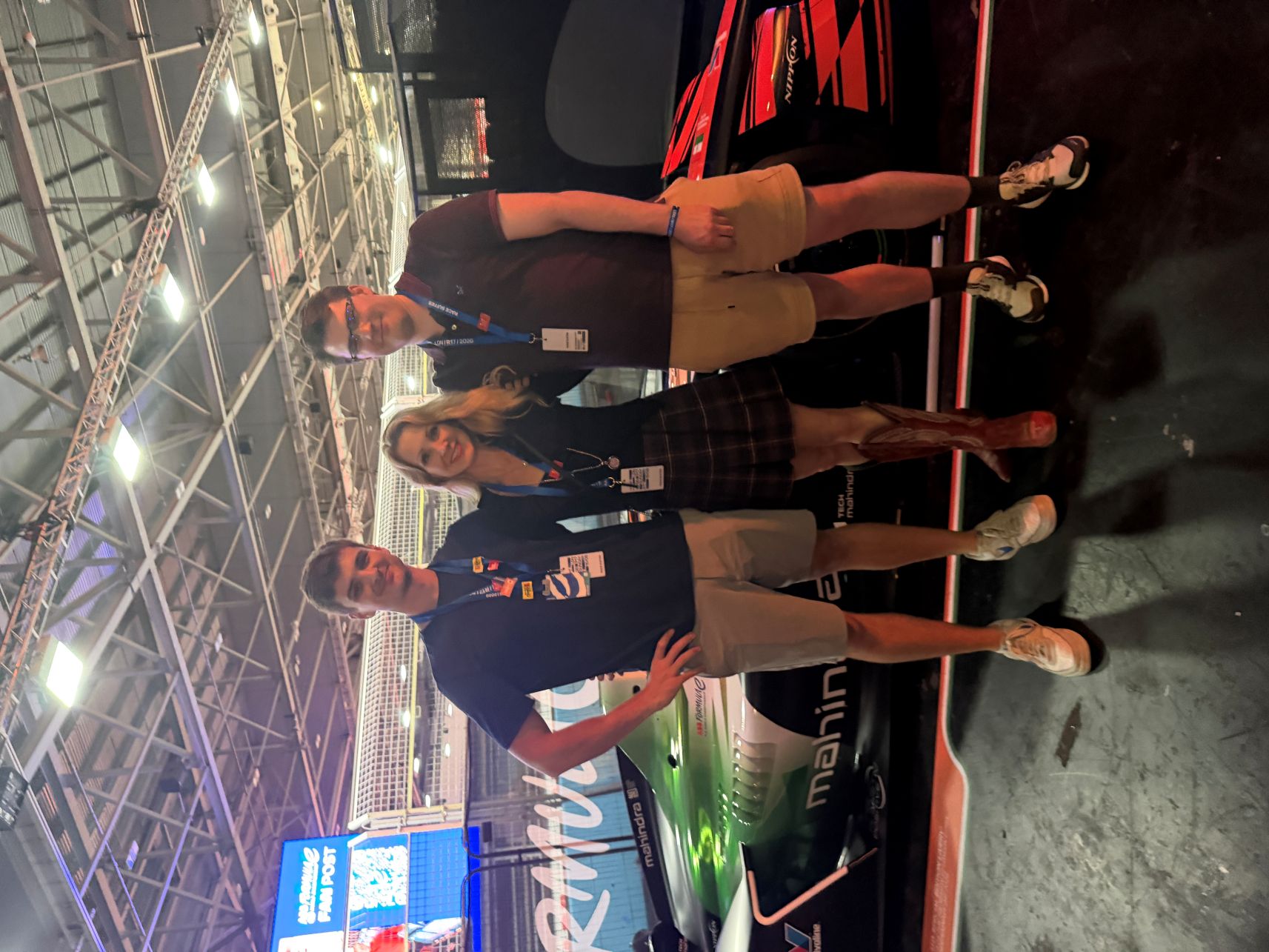
It was a busy morning after a busy two weeks in the UK. I was in Oxford, England, visiting my son with a primary goal of attending his company’s big end-of-race-year Formula E Grand Prix 2026 races in London.
We did all the things and cheered and celebrated hard in London and then returned to Oxford for a week of mother-son normalcy, enjoying his everyday life in Oxford and my life in Oxford which is beginning to feel like a home away from home.
On the day of this video, my last full day in Oxford before returning to the US, my son and I went to the gym to work out together.
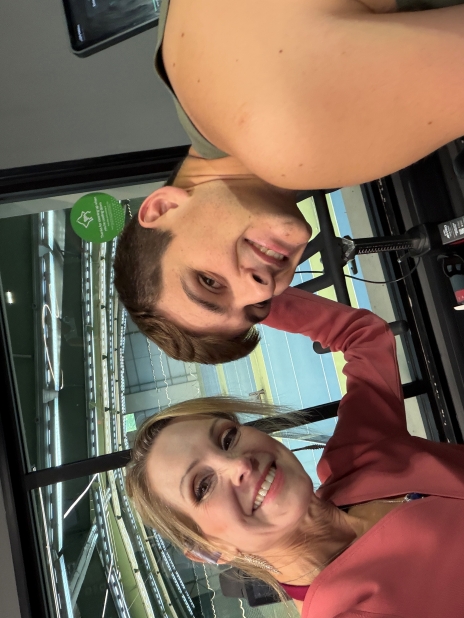
After our workout we headed to Love Coffee cafe in Oxford’s Summertown neighborhood where my son ordered an English breakfast and I enjoyed my usual americano, hot, black. (I fast until late afternoon as you may know from my KindEdge longevity discussions.)
As it was my last day in Oxford, I asked my son if he would entertain the idea of doing an interview with me. He gladly obliged and pushed aside his brekkie. I pulled out an iphone stand and two mini microphones and “Click” the recording began.
Here is the cool conversation that unfolded.
I had not shared any of the questions with him and I wasn’t sure exactly how this would come out. At a minimum, I thought, this would be a nice personal video archive of a moment in time in my son’s life. And many of my questions had sprouted from the seeds lain by friends over the past few years. People back home often reach out to me with questions, from moms asking for advice for sons or daughters who seek to pursue a race engineering career, to adult race geeks who want to know how the real stuff works. I had amassed a hefty cache of questions that I was trying to fold into a cohesive-ish interview.
Yet from this very practical starting point, the discussion evolved into a wonderful example of the way that all the KindEdge.com concepts can be put into action to unlock a life of joy, fulfillment, purpose, and meaning almost immediately.
I saw these elements unfold:
- Convergence:
- I saw that through taking many actions and running many experiments, he was learning and concluding many of the practices we do in KindEdge. He was kind of a real life point of proof that these things really work and really make a difference in the outcomes you will see and feel in your life.
- Serendipity
- I felt that for me, simply trying out this sort of interview with my son enabled many little happy accidents to occur. So much can be gained just by trying, including trying something new.
- Alignment
- As we talked I saw that nothing was a jagged edge outlier or random event or action. I saw the big hard-to-envision concepts of ikigai and higher purpose and fulfillment all being confirmed and re-proven as an integral part of pursuing tough goals, trailblazing a new path, and choosing a job or career.
It was so cool to see this happen naturally. I was… bloody gobsmacked!
If you are searching for a unique career, or a long shot goal of any kind, and want to know how to pursue a difficult career path without simply guessing, this episode is for you.
Key Navigation Points
Use the outline below to navigate the key topics and timestamps covered in this interview:
Full Interview Transcript
Introduction: How to Break Into a Motorsport Career [00:00]
- Graham: Okay, how the heck is it that people actually get into motorsport?
- Interviewer (Mom): So hi, Graham. Nice to meet you! You’re 25, so I’ve known you for over 25 years and nine months—25 years and five months when you actually turn 26, yeah. It’s lovely having you here with me as my son, my first of two, so lucky. Can I ask you some questions? How did you choose your career?
- Graham: I think maybe "choose" is an interesting word because obviously I can direct a lot of what I do towards a certain thing, but I've recognized in my life that it's a very weird, winding path. Sometimes what you do isn't immediately what you thought you were going to do. For me, "to choose" meant that I originally fell in love with the automotive world way back when I was a kid, and I really enjoyed it. I loved the design of Tesla, and I thought the concept behind a fully electric car was super interesting. That drove a lot of my initial interests, and in general, I've always been interested in sciences, physics, and engineering. Those were the main two drivers, and then I ended up going into what I thought I was strongest in. I studied mechanical engineering during my undergrad and then very quickly discovered—
Choosing the Right Engineering Degree for Automotive & Motorsport Jobs [03:07]
- Interviewer (Mom): But you changed that in undergrad.
- Graham: Yeah, that's true. I originally did chemical engineering. I declared chemical engineering at Bucknell University, where I studied. The drive for that was trying to play to my strengths. At the time, as an ignorant high schooler, I was like, "I like engineering and I was good at chemistry in high school, so maybe that's what I should do." Very quickly I realized, well, that's not exactly how that works—those two things don't just make one-and-one makes two. Pretty quickly I got into entry-level engineering courses, which basically give you a taste of all these different types of engineering. I got to do the mechanical engineering course with my professor and mentor, Professor Beal at Bucknell, and started realizing that maybe mechanical is the way I want to go. We had a pretty in-depth conversation, and I realized that if I want to do something in the automotive world—designing cars or working on simulations and all these types of things—mechanical engineering is the better way to go because it's a bit more multifaceted.
Discovering Formula 1 and Formula E Career Pathways in the UK [04:30]
- Graham (Continued): So I studied mechanical engineering, and then part of the way through my junior year, I stumbled upon Formula 1 just because of a conversation with someone. I had kind of known of it in the back of my head, didn't really know anything about the sport, and I thought, "Actually, it's a really cool application of engineering knowledge." It's not just designing cars for safety, efficiency, and good fuel economy—you can actually design things to try and achieve a really specific, tight, and narrow goal. So I started watching and quickly fell in love.
- Graham (On Graduate School & Mahindra Racing): Then, between a conversation with my father and a friend of his whose kids went to a school in the UK—Oxford Brookes University, where I studied—I learned about a pathway through which you can get to the UK, study, get specific knowledge in the automotive/motorsport industry, and then make your way into working in Formula 1, Formula E, and really any sort of motorsport. It quickly became apparent to me that it's a really cool industry and technically super possible. So I was like, "Let's just try this," and directed my efforts and energy. I applied to Oxford Brookes, got in, did my one-year master's (which is a full calendar year), and then applied to jobs. With the ups and downs, I eventually got into working at Mahindra Racing (Mahindra Formula E), which is a racing team that competes in Formula E. It's been a good two years so far, and I've been really enjoying it.
Finding Your Ikigai: Aligning Passion, Aptitude, and Sustainable Career Value [06:35]
- Interviewer (Mom): That is incredible. And just because I know you so well, I'll interject with a few things because part of this discussion is the concept of "Ikigai"—the importance of saying, "I feel it in my gut, and I'm going to honor my gut and how I feel." In addition to honoring your gut and your passion, you need to align it with something that delivers value to the world and that also lets you do it sustainably—meaning you're going to make money somehow to keep doing it, whether you're an entrepreneur or getting hired into an organization. What I saw in you is that career path where you have a big ice block and you carve it away to get it narrower to exactly what you want.
- Interviewer (Mom - On Early Passion for EV Design): The other thing I saw is when you talk about your passion for Tesla. When you were learning to drive at age 15 or 16—right after we got back from living in Edinburgh, Scotland, when you were at Fettes—you were driving on your permit, and I decided to click record just to have a memory of what Graham talks about on a drive. You were going through everything about the design and layout of Tesla cars, and how there's a little bit of "loss-y-ness" that could be recovered if the battery layout on the base was slightly distributed differently to add efficiency, maintain momentum, and be more sustainably recharging. You were hungry for the information, but also for envisioning and delivering solutions on your own. I raised my two boys to be "solution-ers," and you see the possible and the solution in any problem.
KindEdge Career Experiments: Testing Your Passion in the Real World [09:17]
- Interviewer (Mom): And then, as far as all the bits and pieces of Ikigai: when you went to Bucknell for chemical engineering, you happened upon Professor Beal's freshman seminar class. When you decided to change to mechanical engineering, he tapped you and made you the only freshman allowed to work on Bucknell's first prototype of an electric vehicle and getting it running. (Rudolph with your nose so bright, won't you guide my sleigh tonight! Like, yeah, I'm a mom, I'm going to cry.) There was a special aptitude and interest combined with value that can be delivered in the real world. We even have those photos on the side of the Bucknell building and in the brochure of you underneath the vehicle working on it. Somebody outside of you saw your aptitude and trusted you with real-world funding.
- Interviewer (Mom - On KindEdge Philosophy): Doing it in real life allowed you to test that theory, because we run experiments in KindEdge. We say you don't just change your whole life blindly; you run experiments and test your theories. Some people say, "I want to make movies," and then realize you do a lot of sitting and standing around waiting on a movie set, and they go, "Oh! No, I just want to write the script." You have to test these things in the real world. You did that, went deep into conversations with your father's friend who knew Oxford Brookes, and dead-on pursued your graduate degree in the UK. Because you let that Ikigai alignment happen—instead of ignoring parts of it and working as a chemical engineer in a refinery in the suburbs of Chicago just for a paycheck—you are now a "self-recharging battery" in how passionate you are about solving problems for your organization. It excites me to see what we talk about in KindEdge happening in real life.
The Risks and Realities of Pursuing a Competitive Motorsport Engineering Job [12:31]
- Interviewer (Mom): That was question one! Now, what were the risks that you took in going into such a competitive, unique—and what many parents might call "impractical" or "long-shot"—attempt when going into graduate school? You were going down a very narrow path competing with everybody around the world for the one or two positions that open up on race teams every year, risking running out of money for your flat and having to fly home. What were the risks that you took?
- Graham: Certainly there are risks—there's always the danger of unintended outcomes. First, I want to acknowledge that I'm very privileged in the sense that I've been given a great upbringing and had parents willing to help support me financially and with housing. I wasn't going to be starving on the side of the street. However, in terms of the risk of unintended outcomes, you interview, you go to places, you get to the last stage and get a rejection, or you get ghosted right away. The risk is that you come back empty-handed. For me, the risk was coming all this way—physically, geographically, emotionally, and chronologically—ending up back home in Florida and feeling like, "Well, I didn't really get anything out of that," losing a few dollars more than I intended to, and looking like a bit of an idiot.
- Graham (On Using Fear as Fuel): If anybody tells you they're not concerned about what people think, they're lying to you at least a little bit. Coming back empty-handed and feeling like I didn't get what I wanted sucks. But I think that fear also pushes you. It does a good job of jump-starting you: "This is what I need to do. I need to stay up tonight and do this side project to really hone my skills and my understanding." That fear aspect was a big driver and a good chunk of the reason why I was successful in the end.
Sun Tzu’s "Death Ground" Strategy: Turning Career Pressure into Breakthrough Success [16:49]

- Interviewer (Mom): In KindEdge, you've heard me talk about The Art of War by Sun Tzu, the ancient Chinese warrior strategist. "Death ground" is where you do your best work—when you know your back is to the wall, and there's no option but to do your best work to move forward. We make bold, "crazy" decisions there, and realize that decision was the only opportunity to get past all the competition and barriers. I also remember the logistical stress you faced at the end of grad school: paying month-to-month for an expensive UK flat that you wouldn't recover, trying to figure out if you could commit to a lease with your buddies or if you'd have to pack your bags and fly home, right up until you landed the job right as grad school ended.
- Graham: Yeah, great timing, though as the timing comes closer, it definitely feels stressful.
Passion vs. Aptitude: Does Following Your Dream Career Actually Matter? [18:42]
- Interviewer (Mom): Let's say you weren't pursuing your passion—say you were a chemical engineer at a refinery in the suburbs of Chicago, looking at the rest of your life. You'd still be making a paycheck and growing a career. Would it matter that you had this interest in motorsport? Do you think you'd be just as happy?
- Graham: I think so, though I struggle to quantify the effect on your life because both are very important. If you want to pursue something that you love, that's great, but you also have to be reasonably good at it. There's a great counterpoint to the trendy "follow your passion" advice: sometimes you should go for what you're good at, and do what you love in your free time. Building success and doing things well can in itself be a very fulfilling thing. For instance, if what you love is surfboarding, but you're not going to get sponsored and make a living off it, maybe you get successful in a career you're good at, which gives you the free time and resources to go surf in Hawaii for weeks at a time. I'm lucky in the sense that I happen to be good at something that I became very interested in.
Why Workplace Culture and Team Values Matter More Than Salary or Titles [21:20]
- Graham (Continued): Would I be just as happy at a refinery? Yes, depending on what you prioritize. Something I've learned from working in an actual job in an office with other people—as opposed to just studying—is that a job isn't just signing a contract exchanging hours of work for pay. The social aspect—the people you work with—might matter even more than what it is that you're doing. If you're good at your work, find gratification in doing it well, and love the people you work with, that's probably the most satisfying position you can be in. When we look at a job contract on paper, we see a salary number, benefits, a title, or a big building and think that's all that matters. All of that matters substantially less than who you are working with on a day-to-day basis.
- Interviewer (Mom): For a 25-year-old, that is so wise! It took me many years to realize that. I was going on long flights to Paris for business meetings and having weeks of business dinners with people who were so unaligned with my values—they were only excited about sitting next to whoever was worth more millions of dollars. I felt so empty because I cared about good work, excellence, and learning. I was the nerd in a land of big money, and I realized I was using my skills in the wrong culture. Good eyes!
Inside Formula E Race Engineering: Working at Mahindra Racing [24:33]
- Interviewer (Mom): Now let's hit some "feel" questions. How do you feel now in your job? How do you feel about the future of this motorsport career for you, and how do you feel about working in a very European-centric industry?
- Graham: The job in this industry is great; I genuinely enjoy it. Even working with a single data point at Mahindra Racing, it's a very interesting industry because you're always kept on your toes. You're always asked to do new things and look at problems from new perspectives. A good race engineer shouldn't just look at things from a rote, trivial point of view like, "This is what we did last time." Even if what you did last time won you the race, the best teams always ask, "What's the better option? What's the better alternative?"
- Graham (On the Urgency & Thrill of Racing): I look for challenges, and I can't imagine sitting around in a slow, controlled, massive automotive manufacturer doing the exact same thing over and over for a slightly changed car model without a sense of urgency. In motorsport, it's all about: What do we need to do to be competitive right now? On top of that, it's obviously cool to wake up on a Saturday or Sunday, watch the TV, and say, "That's us! We're going for first place today," or "Yeah, we got a win!"
- Interviewer (Mom): And you held the chalice and such!
- Graham: Yes! Anytime the trophies come back into the office, I love getting a picture of them. I don't think I'll ever lose interest in this industry.
Living and Working in the UK Motorsport Hub as an Expat Engineer [27:42]
- Interviewer (Mom): And what about European life?
- Graham: I really enjoy it. Being in the UK, you're so close to so many different places that you're guaranteed to meet a vast spread of people—not just from Europe, but from South America, North America, Africa, and Asia. Most of my central friend group is actually French, funny enough, along with friends from Spain, Italy, Germany, and Central America. I'm always amazed by my international colleagues and friends who work in a highly technical industry in their second language. Coming home to a house share with an international group of flatmates with different backgrounds and personalities has honestly been the best part.
How to Network on LinkedIn and Research Your Way Into Formula 1 or Formula E [29:55]
- Interviewer (Mom): Back home, kids send their moms to me to ask how you did this. Stepping back to a higher level than just Formula E or Formula 1: what advice would you give to someone—say, a 17-year-old—who has a gut feeling about a dream career that seems like a long shot, niche, or only exists in another country, and they don't know how to get there?
- Graham: Two things. First, have a little bit of confidence that the unlikely outcome can happen. Don't just assume that because it's niche, narrow, or unfamiliar, it's impossible and not worth bothering. Second, just do research. It always amazes me when people say they're interested in doing something and then do zero research, when in the modern day information is two clicks away.
- Graham (On LinkedIn Outreach Etiquette): If you're researching career paths, the best place to go is LinkedIn. Search for specific job titles, racing teams, or companies, find people in those roles, and send them a message asking for a five-minute chat. I love answering questions, especially from people with an affiliation (high school, university, former colleagues), and most people are happy to help someone who is genuinely interested. One crucial piece of advice: Never send a cold connection request on LinkedIn without a written message! Otherwise, you're just stalking them, and people are hesitant to accept random requests. Send a note explaining what you're after and how they can help.
- Graham (The 50-Profile LinkedIn Spreadsheet Strategy): Research until your brain melts so you understand what the industry and common pathways look like. During my master's at Oxford Brookes—which isn't a guaranteed job placement, you still apply on your own—I spent a couple of days asking, "How the heck do people actually get into motorsport?" I literally made an Excel spreadsheet of 30 to 50 LinkedIn profilesf people working in the exact positions I wanted. I tracked their career pathways:
- Graham (Continued): That data showed me the most common outcomes. For example, I learned I didn't need to spend three or four years doing a PhD to get in. Going into interviews, I felt confident knowing I was on the right track and not wasting my time.
Bridging the "Dark Abyss" of Big Goals with the KindEdge 15-Minute Daily System [35:31]
- Interviewer (Mom): My brain is exploding because, as you know on KindEdge, this is exactly why I built the KindEdge Steps! People go to a $3,000 Tony Robbins "guru inspo" weekend, get super inspired, and see their future vision clearly—but between them and that endpoint is a dark abyss. They don't know the first step forward, so they fail.
- Interviewer (Mom - How KindEdge Works): In KindEdge, we help you build your own Board of Advisors network so you're never backed into a corner saying, "I just don't know." In the first 28 days of the KindEdge Steps, we only take 15 minutes a day—because your life is busy and hasn't been reorganized around this new goal yet. We "tether" each 15-minute daily action together into an unbroken chain: making that one real phone call, booking an appointment, or doing what Graham did—finding 30 people who have done it before, analyzing their patterns, and defining the next five actions. Then we put it into the KindEdge Project Management System, and your network becomes like a boat that carries you forward through conversations with people two or five steps ahead of you.
Career Philosophy: Pursuing Long-Term Fulfillment Over Momentary Happiness [38:15]
- Interviewer (Mom): For our final wrap-up: life is a long game, and we spend more hours working than doing almost anything else. What is your general philosophy about combining work and life, and how do you want that journey to feel from here on out?
- Graham: Maybe come back to me in 20 years! But my personal philosophy is to look for a life that is, on average, fulfilling rather than just looking for what makes you happy in the moment. Happiness is an okay metric, but fulfillment goes deeper. You can find fulfillment in doing work you're passionate about, or simply by being a contributing member of society who does something effectively in their sector—whether that's working in motorsport, automotive, or doing simulation engineering for a sewage waste plant back in the US.
- Graham (On Shared Values, Kindness, and Responsibility): Beyond the work itself, I find fulfillment by working with people I get along with, sharing common values, and putting in effort toward a shared goal. Equally, fulfillment comes from outside of work: being kind, considerate, making others' days better, and nurturing personal relationships with family, loved ones, and friends. Having a fulfilled life doesn't mean you are happy every single second—sometimes bearing responsibility, taking care of others, raising a kid, or volunteering isn't "happy" in every moment, but it is far more fulfilling than chasing constant happiness.
- Interviewer (Mom): Lovely. Thank you so much for chatting with me. I'm your mom, and also your cheerleader, and I'm just here to watch what happens next. Every word you shared is a flavor of wisdom that I will take with me. Whatever decision you're making right now, if it feels right and fulfilling now, it's going to make a great long-haul path for you. Love you, thanks so much!
- Graham: Thanks!
What Are Your Questions? FAQ:
What engineering degree is best for a career in Formula 1 or Formula E?
Mechanical engineering is one of the most versatile and common undergraduate degrees for aspiring motorsport engineers. Because it covers vehicle dynamics, thermodynamics, structural design, and computer simulations, it provides a strong foundation before specializing in a motorsport-specific graduate program.
What are the Best Topics to Study for a Career in Formula 1 or Formula E?
Few universities offer a major in “So you want to be a Formula 1 Racing Engineer,” you can focus your research and learning on building mastery in skills such as these:
- Vehicle Dynamics
- Modelling and Simulation
- Vehicle Science
- Coding in Matlab
- Motorsport Engineering
- Coding in Python
- Simulation Design
- Vehicle Setup Optimisation
- Testing
- Coding in C
- Data Analysis
- Reporting
- Coding in C++
- Psychology
- Interpersonal Communication
- Foreign Language
How can an American engineer break into the European Formula 1 or Formula E industry?
Many international engineers bridge into UK-based racing teams by completing a one-year specialized Master's degree in Motorsport Engineering in the UK (such as at Oxford Brookes University), located near "Motorsport Valley." This provides targeted technical training, local proximity for in-person interviews, and access to graduate visa pathways.
How do you use LinkedIn to research and network into motorsport jobs?
Build a spreadsheet of 30 to 50 LinkedIn profiles of engineers currently holding your target role at Formula 1 or Formula E teams. Analyze their education, internship years, and entry-level roles to map the most common career pathway. When reaching out for 5-minute informational chats, always include a personalized note with your connection request explaining your shared background or specific question.
How does the KindEdge 15-Minute Daily System help you achieve a unique career goal?
Instead of getting overwhelmed by the "dark abyss" between initial inspiration and a challenging long-shot career goal, the KindEdge Steps break the journey into tethered 15-minute daily actions over 28 days—such as researching industry patterns, running real-world career experiments, and building a personal Board of Advisors.