

When One Task Swallows the Whole Plan
This year you’re going to finally do it. That big goal you’ve been wanting to achieve is going to happen come hell or high water. On January first you set up the perfect plan and you’re now committed to making it happen.
You realize that the Wordpress website you built has shortcomings in terms of WooCommerce’s e-mail integrations with your CRM tools and the plugins are unstable. Ugh, even though you spent so much time researching this plan and invested big money on your Wordpress website, maybe you need to completely rebuild the site on a better platform?
Then, every bit of research you do on the twenty top competing platforms turns out to be tainted with salesy spin. So now you feel you need to go deeper and pay an agency to be your trusted advisor. But wait, once you go deep into evaluating agencies, you find that even with in-depth interviews and checking of references, there’s just such a mess of salesy spin that forces you to do more searching for the best total solution for your website. This one little website task on your original “perfect plan” has ballooned into a whole new ongoing workstream that is delaying all the other tasks on your plan.
What is the best way to respond to this time problem?
The most common response is to:
- Remain attached to the perfect plan
- Work frantically on this complex, unpredictable task, seeking to see it to completion. When that finish line eludes you day after day, you stick to your original belief that “I should be able to get this done in a week” and continually label yourself a failure, adding on more self-blame for all the other important tasks you have begun neglecting, from technical work and management of your contractors, to gym workouts to golf socials to important networking meetings to meditation sessions.
But does this urgent completion at the cost of all else, in order to stick to the original perfect plan, work in real life? No. Not for the long game.
Why this doesn’t work in reality:
- When you sacrifice all else in order to stick to an idealistic plan, only one task amongst thousands gets done.
- This delivers a short-term win, but it is a sign of an entirely broken system that will not result in, or enable, success in the long-run.
The Entirely Broken System You’ve Put Your Faith Into*

PUBLIC SERVICE ANNOUNCEMENT:
Any plan that includes daily bouts of self-flogging over unfinished tasks and neglected responsibilities is not a plan.
It’s a punishment.
If the task doer makes good efforts to complete planned tasks, yet still earns a failing grade according to the plan, then the plan is not designed to fit the reality of life’s long game.
And in fact, setting up one’s hopes of achieving a wonderful outcome, while making the actual path to get there impossible, is a form of punishment. Cinderella’s stepmother leveraged this wicked practice of hope-killing when she suggested that Cinderella was free to attend the Prince’s royal ball, yet gave Cinderella an endless list of chores to complete before she would be permitted to depart.
As you plan to work toward a major life goal, it is absolutely valuable to hold in your mind a vivid, delicious picture of what your final success might look like. This image of the end game, your hero shot, is a valuable tool to keep you excitedly working toward your goal.
However, it is important not to let your plan become too attached to that image. The path toward a large goal tends to branch off in unexpected directions as you learn more about the realities of how things work IRL.
Instead, your plan should lay out a series of milestones with the knowledge that we cannot initially assign exact deadlines to each. When creating a new plan, the known tasks and milestones are more like cairns, markers along a winding path that let you know you’re on the right track. But with every step forward, the initial known tasks will multiply and morph. At the start, you are less "making a plan to stick to" but rather setting off on a quest of discovery that will enable you to fill in the blanks on the thousands of yet unknown unknowns.
Too often we don't plan this way, and rather plan with the belief that we can actually predict and know all the unknowns. We become attached to the idea that by creating this plan, we will be able to easily start checking off all those boxes, yelling "weeeeeeeee!" all the way like a child who lifts her feet off the pedals of her Big Wheel and just lets it roll all the way down huge a hill.
When we build our plans around these concepts of quests and discovery, it becomes a more realistic and judgment-free space that allows for necessary exploration, testing and learning. When you are not so locked in on one action, you take advantage of learnings along the way that let you refine the macro plan at each marker.
Realities of Complex Projects:
- Complex projects and meaningful life goals are a long game. You will never build a strong network, and integrate multiple technologies and iron out workflows and processes according to a rigid timeline. Launching a business, or changing your career, or redesigning your life requires you to conduct a series of tests and experiments that expand and contract. But you need time to do those real life tests to gain a concrete knowledge of which choices are right for you.
- Sometimes one rare sprint to get a job done is an effective way to remove bottlenecks in a workflow. But the whole system breaks down if it is reliant upon constant, repeated sprints.
- Tasks required to achieve a complex goal will almost always expand and branch out. This expansion is a vital part of the learning and testing process. If you were to execute based only on what you knew at the start of the planning process, you are missing the chance to incorporate myriad new facts you’ve discovered along the way. The seeming “delays” in completing a planned task are not failures or shortcomings. They are times of exploration. You are on a quest to find the best solutions out there.
- Even if you squeeze one unwieldy task into a tight timeline, working 24-7 to pile drive it toward the finish line, you will discover that as soon as you whack-a-mole on this huge monster of a problem, another will appear the very next day. When every task in your perfect plan keeps ballooning and having babies, you realize you cannot treat any one life-hijacking monster task as an exception. Complex goals will always come with a bit of unpredictable expansion. That problem is not solved by neglecting all the other important parts of your life. You need an overall system that is built for change.
Hold the Fort: You Must Fortify the Foundation Every Day
As I mentioned in my “Eat Steak” video about a longevity-focused lifestyle, my father captured many great achievements in his legal career, in his commitment to volunteering and community leadership roles, in parenting and more. However, his ability to continue to contribute his gifts to the world was halted abruptly when he died at the age of fifty.
What happened? What part of the formula for long-term success was amongst his many near-term wins?
What was missing was the KindEdge360 practices that prioritize regular nourishment of the mind, body, and soul that we need to call upon when we’re pursuing a big goal. Without regular exercise, and without practices that calm and refocus the mind, and without food for the soul in whatever way fits you, the foundation becomes unable to sustain consistent returns to hard work. Every day has got to feel good and recharge all parts of us, 360 degrees.
I do not blame my father as there were cultural differences and severe lack of knowledge in the medical world back in his day. But when I find myself becoming too lopsided with a nose-to-the-grindstone mentality, I remind myself that if I don’t take best care of the body bag in which my brain lives, and if I don’t take care of the way my brain is nourished, and if I don’t feed my soul and spirit in all the ways I that energize me and make me feel whole, then I’m putting myself at risk of reaching a “game over” situation. I’m fifty-four so the last four years I consider to be “bonus” years in my life, pure, precious gifts. I can only continue to do good, and to learn, and to experiment, if I keep this machine running.

So the emotions we feel about never giving up on the perfect plan, are leading us astray. Quitting is never quitting. Quitting is a conscious choice to stop, look up at the higher arc of our greater purpose here on Earth, and then redirect towards our true North Star.
You should never attach to the perfect plan. You should rather know that the long game is a process of continual sensing, feeling, reflecting and then redirecting toward your true north.
How to Hack Human Nature to Succeed at the Long Game

The science and math of going hard on a challenging task until completion doesn’t actually work in real life. In order to sustain an extended series of hard work sessions, you actually need to build in fun, rewarding breaks. In KindEdge we call this Fun-sizing. With every deep dive into challenging work, you must step out of that deep effort mode and give yourself a reward. Whether it’s a long jog outside, a cup of tea while listening to music, a chat with a friend, or a delicious deep dive into googling some nerdy topic, give yourself the reward that makes your brain tingle. When you return to do the hard, challenging work the next day, your body’s dopamine system will kick in, keeping you actively working in pursuit of progress, knowing that hard work will lead to reward.

Leverage Your Handicaps as a Reason to Innovate
When you hit the wall of impossible-to-finish work, use that struggle as an opportunity to innovate. If you were barely squeaking by getting just enough done, you’d never change your approach. You’d just keep treading water and feeling behind. But if you truly get hit by a tidal wave that knocks you over, you have no choice but to say “I can’t. There’s just no way. Just no way.”
But it is at that point where you start to think creatively. “Well, if I just can’t get this done, who can? Or what can? Or how can I create a motor that keeps it running without me?”
Richard Branson thought this way when his dyslexia prevented him from easily progressing in his entrepreneurial business goals. He turned his “I just can’t” handicap into a gift and a superpower. It forced him out of the “do it all perfectly yourself” mode that his grade school teachers had set forth. Instead, he moved into a mode wherein he essentially worked with his hands tied behind his back. Knowing he could do nothing in that state, his only means of moving his goals forward was to work through other people that he surrounded himself with. And because each of those people had their own specific strength and capabilities, Richard built a network around him that was many times more powerful than he could have been on his own.
So in the case of time, when you find yourself getting handicapped by “not enough minutes in the day” don’t fight it. Imagine that your hands are tied behind your back and the only way you can move your goals forward is to find people and tools that have strengths and capabilities to get the job done as well or better than you would have.
Other Tips to Wrangle the Unpredictably Expanding Tasks:
- When listing a task give it a time grade: Assign the amount of time it is worth in comparison to other higher purpose goals. If a nearly worthless task that you budgeted 60 minutes for begins to drag on for three hours, be ruthless about chopping it off at the knees, and letting it get wrapped up as is. Work that is not your bespoke expression of your gifts is ok to do at a C- level.
- Alert to all perfectionists: call your therapist before you try this at home!
- Accept that all things in your day are critical choices. Pixel by pixel, each choice you make paints a picture of who you are. Do not choose flippantly; give everything deep consideration with a bias for “no.” In the KindEdge Steps we create a formal “purpose filter” that makes every choice stupid-easy because you have clarity on your long-term goals and how you want your epitaph to read when you die.
- Yes, in KindEdge we go deep. Your life, and your one chance to leave something meaningful behind when you go, is no joke. It's the most serious business on Earth. It deserves this sort of weighty consideration and ruthless un-choosing.
- Categorize every possible addition to your schedule as follows:
- A “no”
- Just git ‘er done
- Do well, but remember that done is better than perfect
- One of my “Big Rocks” and an expression of my greatest gifts. This is how I live out my higher purpose and it’s worth my whole-hearted personal investment.
Your Bottom-Line Takeaways for Winning the Long Game:
- Skipping your workout to win back time to achieve today’s goal does not actually result in long-term success and worse, it obfuscates, rather than exposes, the root cause of the problem
- The tug-of-war battle for time that you fight against yourself is a good thing; it’s the red flag that tells you to stop, reassess, modify and refocus on your KindEdge North Star. Ask yourself “Ok, let’s step back from the frustration of this task on this day. What’s the big picture thing I’m doing here?"
- In the beginning it’s hard to outsource and delegate as it takes just as much time to find the right delegates as it does to do the work. But have faith that every effort you make to create clearly-defined aggregated sets of tasks within your project plans, organized by workstream (as we do in the KindEdge Steps) will deliver many multiples of time won back when you are eventually able to use those to create clearly-defined roles that enable you to be begin delegating in large batches of tasks. My “slow is flow” mantra works here. When there’s just too much to do, it’s sometimes better to stop and zoom out, and find new ways to wrangle these tasks.
- When work feels impossible, use that as a time to innovate. Slow down and google the heck out of every possible method of handling a goal or task. Call one of your KindEdge trusted advisors and then call another. Search for new solutions and you’ll create a little room to grow.
- A bonus outcome is that by continually refining your plan based on your latest learnings and discoveries, you end up with a plan that is far more durable and built to last through future chaos.
Author and speaker Stephen Covey, who wrote the 7 Habits of Highly Effective People, is quoted as saying "I am not a product of my circumstances. I am a product of my decisions." This to me is a combination of knowing your purpose, making tough choices, and then those decisions are the "how" of how you use those things to navigate your next steps.
(Hey, check this out! You can still order his book as a cassette tape! Better order a retro cassette player along with it!)
The KindEdge Steps help you build the foundational pieces you need to have rock-solid clarity on your higher purpose and how you want to express that in this lifetime. We set up your higher purpose, your North Star, and your Big Rocks, the short list of things you’re choosing to focus on at this phase of your life.
The best Big Rocks are those activities that enable you to:
- Express your greatest gifts...
- To do the greatest possible good...
- With the longest impact...
- On the people or things that matter most to you.
- With the longest impact...
- To do the greatest possible good...
No matter how long it takes you, when you keep returning to valuable, meaningful hard work every day, that chain, unbroken, builds something that is a lasting expression of you.
Footnotes:
*RE: The Entirely Broken System You’ve Put Your Faith Into - I’m breaking rules by ending with a preposition. Doing it the right way was too much of a mouthful. I also break rules with the Oxford Comma, especially when I’m in Oxford.
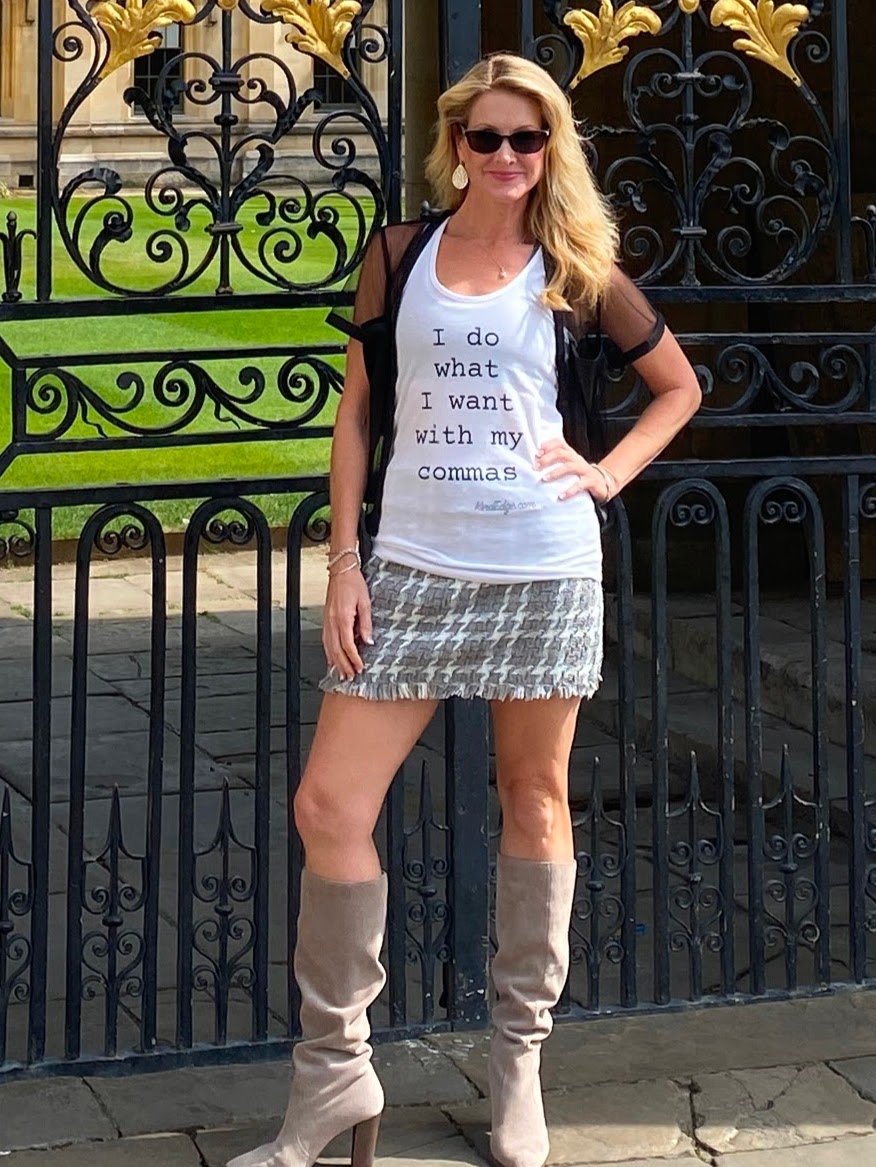
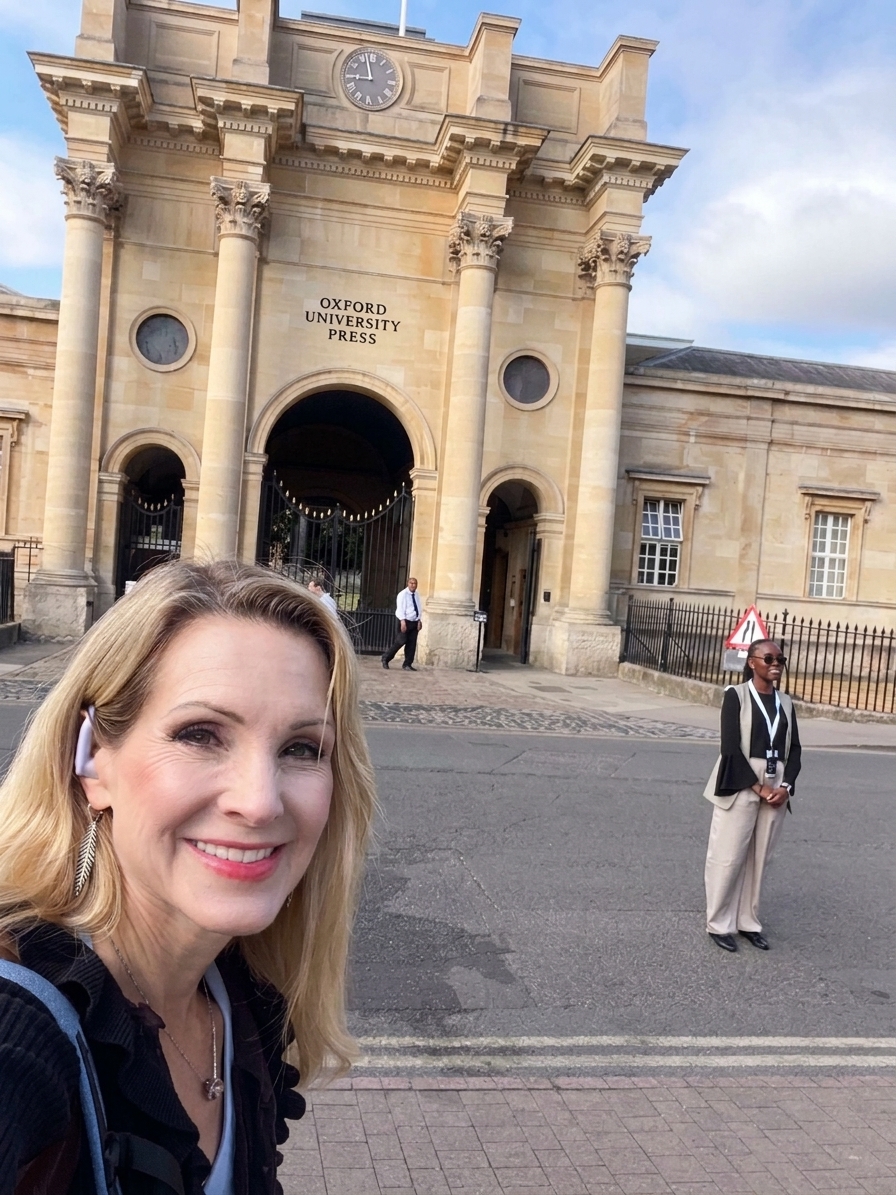
If you like my rebel nature with grammar, you’ll love the world’s best tribute to Oxford Comma rebels everywhere:
Post Script
I may or may not have skipped a workout to finish writing this blog. (Ugh.) If so, then it’s back to the drawing board on my systems….
- Tip: When days are “chopped” in too many ways, in this case with a mid-morning car repair appointment and a mid-afternoon doctor appointment and the need to work from odd locations, things tend to unravel and tough choices need to be made. As a general rule I place all “chaos” appointments at the end of my days, however, today’s appointments were necessarily distributed broadly from AM to PM. My future refinement would be to force these warring appointments into separate days and at times that are after my “big rocks” and “KE360” activities are done. I generally wake up at 4:30 or 5:00 am, but I did not do my KindEdge “time tyrant” practice of protecting the most precious hours for the most precious work.
- Tip: Never skip more than one day. Skipping only one day is an exception. But another day skipped is a new habit and a third day skipped is a negative pattern. The only solution is to zoom out and refine the big picture. The world is not creating more time. We must plan for this reality.
I’m wishing you fun–sized progress on your KindEdge journey to unlock the alternate ending to your life.
Cheers, cin-cin and hugs,
MarySueIRL