

Why Goals Fail and Dreams Fail and What to Do Instead
Here is something that took me a long time to understand, and that I now believe is the most important thing I can tell anyone who wants to make a real change in their life.
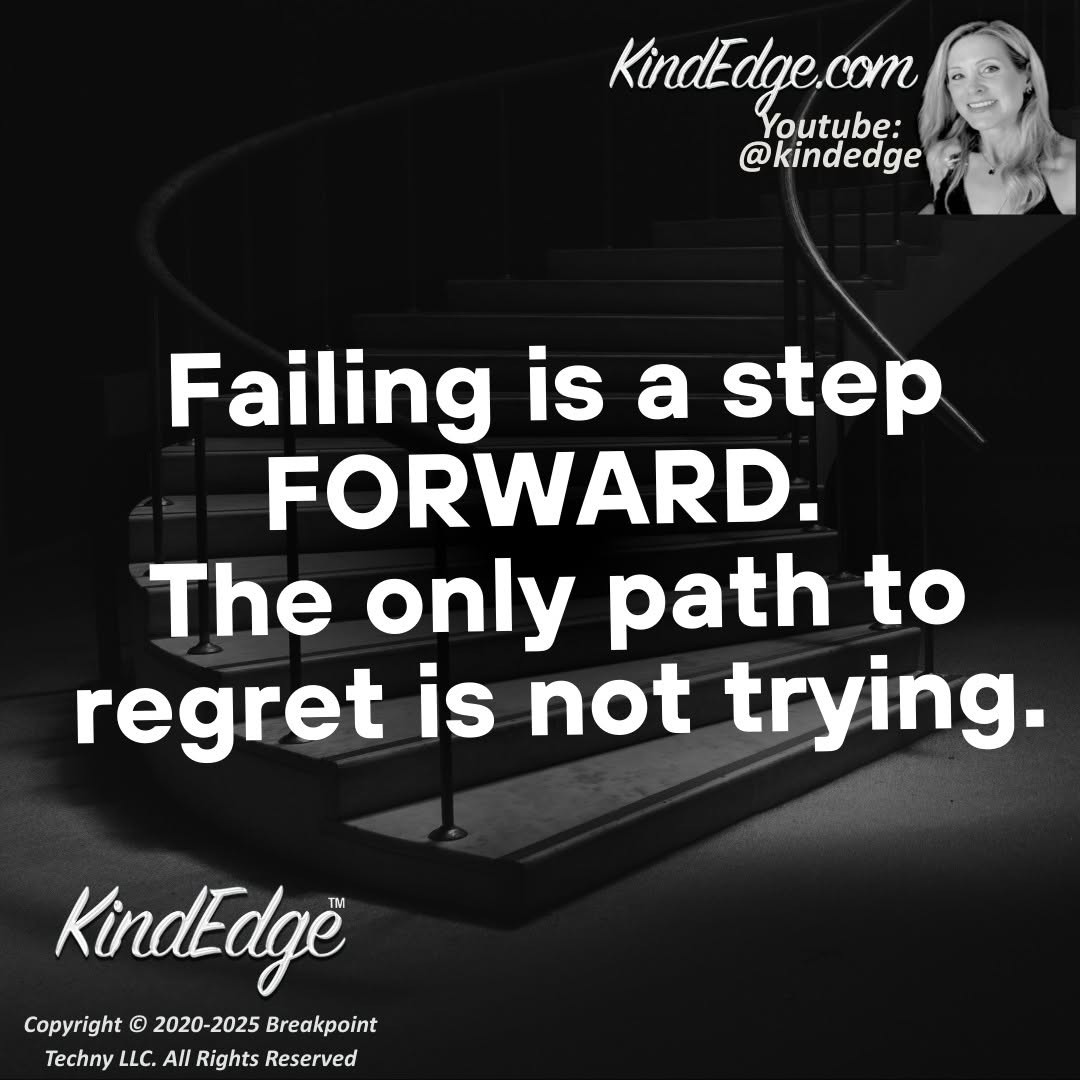
If you have a goal and you start charging toward it, you will fail. Not because the goal is wrong. Because you will trip over your own default modes, your habits, your existing relationships, your environment, your unexamined assumptions about what your life looks like. You will hit the first real obstacle and have no foundation under you to push through it.
And if you have a dream and you stay in the dream, watching content about people who are living the life you want, consuming their stories as a fan of their journey while your own stays parked in the back of your head, you will also fail. The dream will stay exactly where it is, endlessly deferred, increasingly familiar, never real.
There is something in the middle. It is not charging forward and it is not staying in the fantasy. It is: get clear on what you actually want, get viscerally real about what that end picture looks like, and then take the tiniest first step. Not toward the end goal. Toward the very next thing.
The Vast Unchoosing
Before you can move toward any big life change, you need to understand what you are actually signing up for. And it is more than most people realize.
If you want to become a marathoner, you are not just adding a training schedule to your existing life. You are evaluating every friendship, every late-night habit, every social obligation, every environment you frequent. You are asking: does this fit the life of a person who gets up at 5 a.m. and trains? The friend who convinces you to stay out until 2 a.m., the weekly social ritual that leaves you depleted, the defaults you have built up over years of living a different kind of life, all of those things become active obstacles the moment you try to add a real goal on top of them without changing anything else.
I call this the vast unchoosing. To choose one new thing, one new direction, one real change, you have to unchoose a staggering number of other things. And that vast unchoosing is difficult. Which means before you start it, you need to know, at the level of your gut and your bones, that the change you are after is worth all of that work.
That is why clarity comes first. Not the plan. Not the first step. Clarity.

Starting With Your Gut
The gut always guides. Everything else that follows comes after the gut does its job first.
What that means in practice is: you sit down, alone, with your intuition, and you ask it the real questions. Not what should I do. Not what would look good. Not what would people approve of. What do I actually crave? What is the daily feeling I am after? What is the thing inside me that, if I am honest, I know I am meant to be doing here?
When you do this honestly, without the noise of other people's expectations and without the urgency of just doing something, a picture starts to emerge. Not a finished plan. A direction. A feeling. A specific enough image of the life you want that you can begin to understand what it would require.
In the KindEdge Steps, we have a process for turning that gut feeling into something with absolute clarity. Not just a vague sense of wanting something different, but a documented, viscerally real picture of what that end state looks like: how you spend your days, what your work feels like, who is around you, how your body feels, what you have let go of, what you have built. You get so clear on it that you can feel it before you have lived it.
That clarity is what makes everything that follows possible. Because it is the only thing that will carry you through the difficult middle, the vast unchoosing, the hard conversations, the experiments that do not work, the moments when your old default modes try to pull you back.
The Abyss in the Middle
Most people experience a change they want to make as two things: where they are right now, and the distant end picture of where they want to be. And between those two things is a dark abyss that looks unknowable, too far, too uncertain, too full of steps they cannot yet see.
That abyss is not the problem. The abyss is normal. Every worthwhile change has one. The problem is treating the abyss as a reason to wait rather than as a reason to build a bridge, one plank at a time, from where you are toward where you want to go.
You do not need to be able to see the whole bridge before you lay the first plank. You need to lay one plank. And then the next. And as you move across those early planks, the picture of the end changes, becomes more specific, evolves. You learn things in the first steps that you could not have learned from the starting point. The end goal you were marching toward may shift into something more real, more you, more specific to what you actually discovered you wanted once you started moving.
This is why you do not plan for the end goal. You plan for the very next step. And you let the end goal evolve as you go.
The Dumbest First Step Is the Right First Step
Say you want to write a book. The dumbest first step is not enrolling in a writing course, not building a website for your future author brand, not researching agents. The dumbest first step is texting a friend and saying: I have been thinking about writing a book. Do you know anyone I could talk to about this?
That text puts the idea into the real world. It makes it something other than a thought in your head. It tethers you to a next step, because your friend is going to respond, and their response is going to generate the one next thing you could not have generated alone.
You do not judge the step. You do not say I should have gone to a more credible source. You do not immediately Google the ten top writing coaches and lock into one. You follow the thread, loosely, early, iteratively, always running it back through your gut to check: does this still feel like me? Is this still aligned with what I actually want?
You treat the goal as important, even when it still feels embarrassing to say out loud. You treat the first conversation as research, not as idle talk. You give it the same weight you would give to planning a surgery, rearranging your summer, telling your household: this is happening, I need your support, things are going to shift.
Because this is happening. And things are going to shift. And you are the only one who can make it real.
If you want in on the community taking daily action on their big goals — not just thinking about them — subscribe here: kindedge.com/subscribe
Or just come watch. The Project of You is all over the channel: youtube.com/@kindedge