

What Is a KindEdge Experiment? And Why Float Tanks?
At KindEdge, we do something we call Experiments, or as I like to say, Experimentos. The whole idea is to taste test the world. Because if you haven't tried it, you don't know whether it might become the thing that makes your redesigned life feel sustainably awesome, deeply productive, and truly aligned with your higher purpose.
So when I heard about float spas and sensory deprivation tanks, I knew it was time to experiment. The destination: Florida Float Spa, also known as St. Pete Salt Works, in St. Petersburg, Florida.
What Is a Float Spa? Sensory Deprivation, Epsom Salt & Magnesium Explained
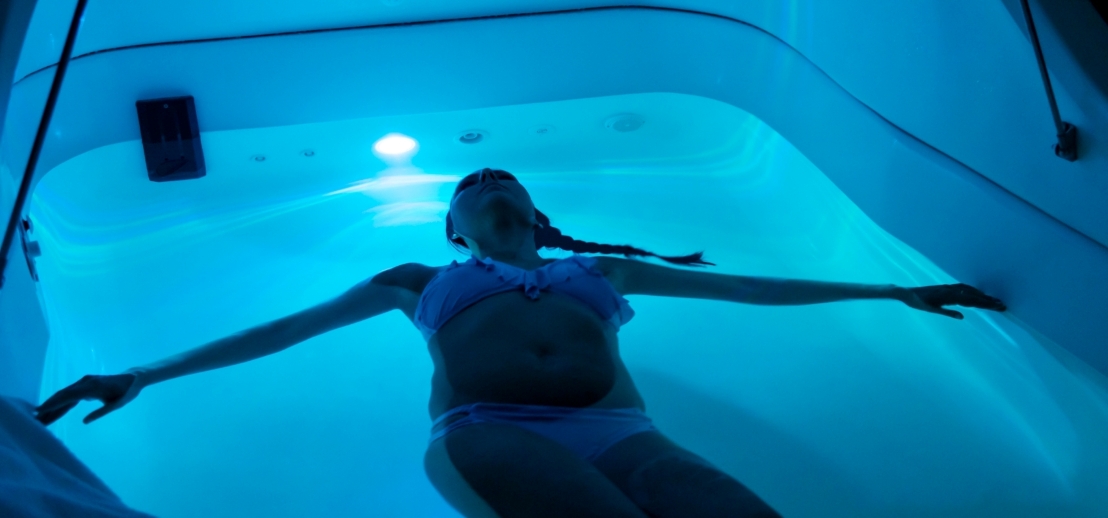
A float spa, also called a float tank or sensory deprivation tank, is a private room experience where you soak in an enclosed tub filled with body-temperature water and an extremely high concentration of Epsom salt (magnesium sulfate). The salt density is so high that your body floats completely on the surface, completely effortless, completely supported.
Here's how the session at St. Pete Salt Works worked:
- 60-minute private float session in a personal float pod
- Water saturated with Epsom salt (magnesium sulfate) for full-body buoyancy
- Option to dim or fully extinguish all lights for total sensory deprivation
- A soft blue light inside the float tub stays on by default (good for first-timers)
- Private room with private shower (most guests float in the nude)
Since I was filming content, I kept my bathing suit on, but the setup was completely private and totally comfortable.
My First Float Tank Experience: What Happened Inside
I went into this with a comparison point most people don't have: I've floated in salty ocean water before, here in Florida and in the Caribbean, where the salinity is high enough that you naturally float at the surface. But floating in the ocean is a completely different experience psychologically.
In the ocean, your nervous system stays on alert. There's a current that could carry you away. There are sharks. Your body knows it needs to watch its back. Your brain, specifically your prefrontal cortex, your executive function, stays engaged whether you want it to or not.
Inside the float spa? Same physical sensation of floating. But an entirely different mental landscape was possible.
The Meditation Tunnel: Flow State Like Nothing Else
I'm someone who meditates regularly — before workouts, in yoga, in stillness. And I've discovered what I can only describe as a meditation tunnel. It's not visual. It starts as a dim, gray concept, not even a color, and then it lights up, brightens, and pulls me in. It feels like being drawn forward through space at the front of my forehead. Pure energy. No thinking, no planning, no doing. Just: yes. This is it.
It's so addictive that at the end of yoga class I'll wait and wait and wait before I let myself come out of it. I have to literally talk myself back when I'm supposed to start a workout. It is a well of energy, not thoughts.
In the float spa, I could feel that state trying to emerge. But here's what was so interesting — and what taught me something real about the brain:
Why Your Prefrontal Cortex Fights Sensory Deprivation (Especially the First Time)
Every time I would start to drop into that deep meditation tunnel in the float tank, I could literally feel my executive function, my prefrontal cortex, march back in. Like a security guard doing rounds. And what's going on now? And what's going on now?
It makes total sense. Your brain has wiring that says: you are floating at the top of the water in the dark; stay alert. That is a legitimate survival signal. And for a first-time floater, your body doesn't yet have the reference point that this environment is safe, contained, and intentional.
The result: it took me roughly 40 minutes into the 60-minute session before I really settled. And even then, I was never fully in the meditation tunnel the way I get in yoga or seated meditation. By the end I was even getting a little playful — kicking my legs to see if I'd drift left or right.
That's not a failure. That's information. And the information is: the float spa is something that rewards repetition. First-timers, give yourself grace.
The Physical Benefits of Epsom Salt Float Therapy: Magnesium for Muscles
Here's something I want to make sure doesn't get lost: the magnesium soak is genuinely powerful for physical recovery. Epsom salt is magnesium sulfate, and soaking in it is a well-known tool for:
- Easing sore muscles after intense training
- Reducing inflammation and physical tension
- Supporting magnesium absorption through the skin
- Promoting full-body relaxation on a cellular level
I'm actually going to recommend this to my son. He trains relentlessly and has done magnesium salt baths at home. A full float session takes that to a completely different level. If you're an athlete, a hard trainer, or someone carrying chronic muscle tension, this alone is worth the experience.
Float Tank vs. Massage vs. Yoga vs. Sound Bath vs. Cryotherapy: What's Actually Different?
Here's the honest comparison from someone who uses all of these tools:
- Massage: immediate gratification, a service being done to you, physically delicious, especially deep tissue on sore hamstrings. You receive it passively and you want it to never stop.
- Yoga / Yin Yoga: movement-based, community or solitary, structured relaxation through the body — incredible, but it involves doing.
- Sound bath: deeply immersive, vibrational, often group-based, beautiful for emotional and nervous system regulation.
- Cryotherapy: sharp, energizing, stimulating — the opposite of float.
- Float spa: none of the above. It is a letting go. It is not receiving a service. It is not doing. It is something entirely in its own category — a permission structure for your nervous system to be untethered from the outside world.
The float spa does a very unique thing that nothing else does. It is its own tool.
Verdict: Is Float Therapy Worth It? Here's How I'm Adding It to My Toolkit
Float therapy is now in my toolkit, but not as a regular weekly practice like yoga. It's a call-upon tool. There will be a day, maybe after an intense training block, maybe during a season of mental overwhelm, when I'll wake up and just know: today is a float spa day.
That's the framework I'm suggesting for you too. You don't have to make it a lifestyle ritual. You make it available to yourself, and then you call on it when you need what only it can give you.
And on your first time? Know that the first 40 minutes might be your nervous system negotiating with itself. That's not wasted time. That's your brain learning a new kind of safety.
The KindEdge Experimentos Philosophy: Always Taste Test the World
This is what we do at KindEdge. We taste test. We stay curious. We try the float spa, the sound bath, the yin class, the cryo chamber, not because we have to add everything to our lives, but because we want to know what's available.
Because designing a life that feels sustainably awesome, purposeful, and genuinely yours requires knowing your options. You can't choose what you've never tried.
So go experiment.
Come experiment with us: kindedge.com/subscribe
The latest video is waiting for you at youtube.com/@kindedge